

By Ahmad Fahmi Mohd Samsudin
President, Muslim Youth Movement of Malaysia (ABIM)
Chief Executive Officer, Global Peace Mission (GPM) Malaysia
Every era faces its own civilisational test. In Malaysia today, one of the defining questions challenging our collective maturity as a nation is how we respond to the refugee issue at a time when fear, anger and prejudice increasingly shape public discourse.
Over the past few weeks, debates surrounding Rohingya refugees have revealed both the best and the most troubling sides of our society. Some have courageously defended the principles of humanity and justice. Others, however, have resorted to stereotyping, dehumanisation, insults and calls for actions that go beyond the boundaries of law, ethics and basic human decency.
As a result, the refugee issue is no longer merely a matter of migration or security. It has become a reflection of the values that shape our society. What is being tested today is not only government policy, but also our ability to uphold reason, justice and human dignity in times of uncertainty and anxiety.
In many ways, how we treat the most vulnerable among us will determine how history remembers us. The world is watching whether Malaysia will continue to be recognised as a nation that upholds compassion, justice and humanity, or whether it will succumb to the rising tide of xenophobia, fear, hatred and divisive politics that have emerged in many parts of the world.
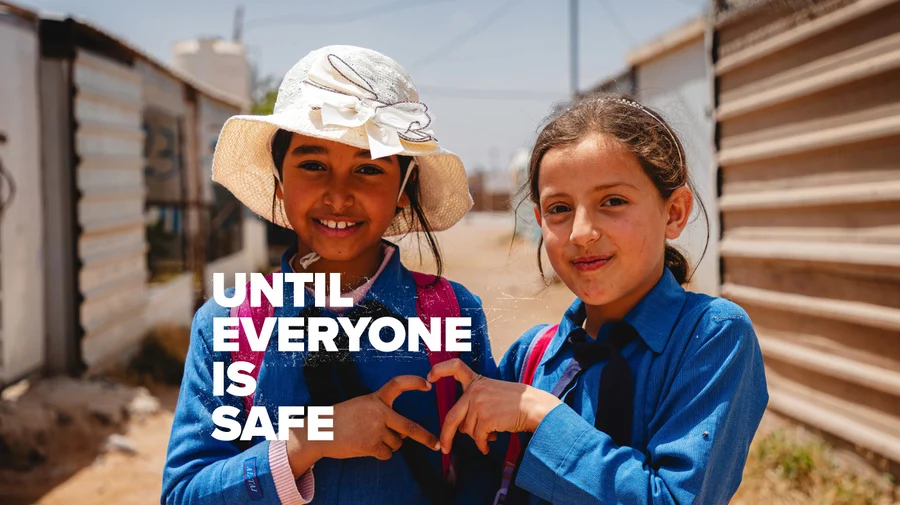
Every year on 20 June, the international community commemorates World Refugee Day in solidarity with millions of people who have been forced to flee their homes because of war, persecution, violence, human rights violations and humanitarian crises. This year’s theme, “Until Everyone Is Safe,” coincides with the 75th anniversary of the 1951 Refugee Convention.
The theme serves as a reminder that safety and protection cannot be privileges enjoyed only by a fortunate few. They are responsibilities shared by all humanity.
Yet in Malaysia, this year’s World Refugee Day arrives amid a particularly challenging atmosphere. Public debate surrounding refugees, especially the Rohingya community, has become increasingly heated and polarised.
To be fair, people have legitimate concerns. Questions regarding public security, employment opportunities, pressure on public services, documentation issues, environmental conditions, healthcare costs and social cohesion deserve serious discussion. Such concerns should neither be dismissed nor trivialised. Governments have a responsibility to safeguard national sovereignty, uphold the rule of law and ensure public safety.
At the same time, concern must not be allowed to evolve into hatred. Frustration over policy shortcomings cannot justify denying another person’s humanity. Anger over genuine challenges cannot be translated into hostility towards entire communities who are themselves living in desperate circumstances.
Part of the tension we witness today is fuelled by misinformation, half truths and manipulated narratives. In the digital age, hatred often travels faster than facts. Repeated claims, even when unverified, can eventually acquire the appearance of truth.
Scholars have described this phenomenon as “manufactured ignorance”: the systematic production and dissemination of ignorance that erodes society’s ability to distinguish between facts, perceptions and propaganda.
Even more troubling is the tendency to exploit refugee issues for political gain. History repeatedly shows that during periods of economic hardship, political uncertainty and social anxiety, the most vulnerable groups often become convenient scapegoats. Refugees, migrants and minorities are blamed for problems whose causes are often far more complex.
Malaysia must resist falling into the same trap.
At a time of increasing social tension, political leaders, religious figures, educators, media practitioners, influencers and community leaders have a crucial responsibility. They should serve as bridges that foster understanding, not walls that deepen division and prejudice.
Within the Islamic tradition, religious leaders are called to be agents of mercy, reconciliation and justice. When society is overwhelmed by fear and uncertainty, what is needed are voices of wisdom and compassion, not voices that inflame resentment and hatred.
This is why it is essential to distinguish between addressing problems and hating people. Individuals who commit offences must be held accountable under the law regardless of nationality, ethnicity or status. Yet holding an entire community responsible for the actions of a few is not justice.
According to Malaysia’s Inspector General of Police, 89 Rohingya individuals were recorded as being involved in criminal cases between 2024 and 2026, representing approximately 0.02 per cent of all recorded crimes during the same period. These figures do not deny the existence of challenges that require attention. Every offence must be investigated and addressed appropriately. Nevertheless, justice demands that accountability be directed towards perpetrators, not entire communities.
In Islam, this principle is rooted in the concept of karamah insaniah, the inherent dignity bestowed by God upon every human being.
The Quran declares:
“Indeed, We have honoured the children of Adam.”
(Quran 17:70)
Human dignity is not determined by nationality, ethnicity, legal status or social standing. It is part of the sacred trust of being human.
This year’s World Refugee Day is particularly significant because it coincides with the beginning of the Islamic New Year, 1448 Hijrah.
The history of Islam itself begins with the story of people forced to leave their homeland in order to preserve their faith, dignity and safety. The Hijrah was not merely a geographical migration. It was a story of hardship, sacrifice, loss and the search for protection.
Before the migration to Madinah, some Muslims sought refuge in Abyssinia under the protection of the Christian ruler, King Negus (Najashi), who was renowned for his justice. Likewise, the Prophet Muhammad ﷺ praised the Pact of Hilf al Fudul, an alliance established to defend the oppressed and uphold justice beyond tribal loyalties and narrow interests.
These episodes remind us that protecting the vulnerable is not a foreign concept within the Islamic tradition. It is deeply embedded within its moral and ethical foundations.
Of course, the realities of modern refugee crises cannot be equated directly with the Hijrah. Contemporary nation states face far more complex responsibilities in managing borders, security and national interests.
Yet the moral lessons remain profoundly relevant.
They remind us that behind every statistic, policy debate and media headline are human beings struggling to rebuild their lives.
Years of engagement with refugee communities have repeatedly reminded me that behind the label “refugee” are ordinary people whose hopes, fears and aspirations are not so different from our own.
I once met a refugee couple who had long dreamed of having a child. After years of hardship and eventual resettlement in the United States, they received the joyful news that they were expecting their first child.
When I asked what they hoped most for their unborn child, the answer was simple yet deeply moving:
“I only hope that my child will be born as a citizen.”
At that moment, I realised that something many of us take for granted is, for others, an extraordinary blessing.
For many refugees, citizenship represents identity, protection, rights, opportunity and the assurance that they belong somewhere in the world.
On another occasion in Cox’s Bazar, Bangladesh, I met a Rohingya refugee who spoke fluent Malay. Curious, I asked him why he remained in the refugee camp when life in Malaysia could potentially offer greater comfort and opportunity.
His answer was immediate.
“I may be able to build a better life for myself elsewhere. But my family is facing genocide. I cannot leave them behind.”
His response reminded me that refugees are not merely victims of conflict. They are also fathers, mothers, sons and daughters. They carry with them love, loyalty, memory and an enduring attachment to home.
Most did not leave because they wanted to. They left because circumstances gave them no other choice.
Perhaps this is one of the missed opportunities in our commemoration of Maal Hijrah this year. As Muslims reflect on the Hijrah as the beginning of a new civilisation, we should also reflect on the reality of millions of people around the world who remain displaced by war, persecution and prolonged conflict.
Maal Hijrah reminds us that safeguarding national security and protecting human dignity are not contradictory objectives. Rather, they must advance together within a truly civilised society.
Malaysia is not unfamiliar with the experience of hosting and assisting refugees. From Vietnamese refugees in Pulau Bidong to Cambodian refugees, Cham Muslims, Moro communities, Bosnians, Syrians and Palestinians, our history demonstrates that Malaysia’s approach has long been shaped by a balance between humanitarian responsibility, regional solidarity and domestic realities.
This does not mean that Malaysia should open its doors without limits or ignore legitimate security concerns. Rather, it reminds us that our nation has historically sought a balance between protecting national interests and responding to human suffering.
In today’s Malaysia, the aspiration to live together peacefully, justly and with dignity is also consistent with the spirit of Malaysia MADANI, which emphasises humanity, compassion, respect, well being and responsibility as the foundations of nation building.
The strength of a society is not measured by its ability to eliminate differences, but by its ability to manage differences with justice and civility.
In a world increasingly marked by polarisation, identity politics, extremism and online hatred, the real challenge is no longer simply how to manage diversity.
The greater challenge is how to build societies capable of living together peacefully, justly and with dignity.
Peaceful coexistence does not mean ignoring differences or denying problems. Rather, it requires the courage to manage differences maturely, resolve conflicts through dialogue and uphold the dignity of every human being without compromising collective security and social harmony.
What is needed is not an approach driven solely by emotions or populist sentiments, but a comprehensive framework involving regional responsibility sharing, international cooperation, more effective governance and meaningful engagement with local communities.
At the same time, it must be acknowledged that Malaysia bears significant costs and challenges in managing refugee populations. These realities deserve honest recognition. Yet the refugee crisis cannot be placed solely on the shoulders of transit countries.
Ultimately, refugee crises reflect the failure of the international community to prevent wars, stop persecution and provide just solutions for victims of conflict.
In the case of the Rohingya, the world cannot continue to ignore the systemic discrimination, denial of citizenship and human rights abuses that lie at the root of the crisis.
In the end, the greatest question being tested is not about refugees alone.
The real question is who we are as a society.
Will we allow fear to shape the way we view others?
Will we allow anger to override justice?
Or can we protect national security without sacrificing the human values that form the foundation of a civilised nation?
The strength of a nation is measured not only by its ability to defend its borders, but also by its ability to defend the values upon which its civilisation stands.
History will not judge us solely by how we treat the powerful and influential.
It will also judge us by how we respond to those who are vulnerable, marginalised and easily blamed.
In a world increasingly divided by fear, hatred and politics of exclusion, defending human dignity and nurturing a culture of peaceful coexistence may be among the most important humanitarian struggles of our time.
The refugee question is ultimately not only about those who seek protection.
It is also about us.
It is about the values we choose to uphold, the society we aspire to build and the civilisation we hope to leave behind.
Because until everyone is safe, our humanity itself remains on trial.
